15 Friendsgiving Ideas for a Fun and Cozy Gathering
Friendsgiving is a fun way to celebrate the season with the people who make life a little brighter. It brings together the warmth of a traditional Thanksgiving meal and the relaxed feeling of a dinner party with friends. You can keep it small with a few close friends or invite a bigger group for an evening filled with good food, laughter, and plenty of time to catch up.
The best Friendsgiving celebrations do not need expensive decorations or a complicated menu. A welcoming table, a few favorite dishes, and some thoughtful details can make the gathering feel special. Whether you are hosting your first Friendsgiving or looking for fresh ways to celebrate this year, these ideas will help you plan an enjoyable get-together that feels comfortable and personal.
Choose a Friendsgiving Theme
A simple theme can help bring your Friendsgiving decorations, menu, and table setting together. You could choose a classic autumn look with burnt orange, rust, cream, and brown, or go with a modern style using soft neutrals, sage green, and gold accents. If your group enjoys a more playful gathering, consider a cozy pajama dinner, a potluck night, or a relaxed harvest-inspired celebration.
Keep the theme easy enough that it does not make planning harder. You do not need every plate, napkin, and decoration to match. A few repeated colors or details will make the space feel coordinated. You can also mention the theme in your invitation so guests know what to expect without feeling pressured to dress up or bring anything special.
Send Warm and Friendly Invitations
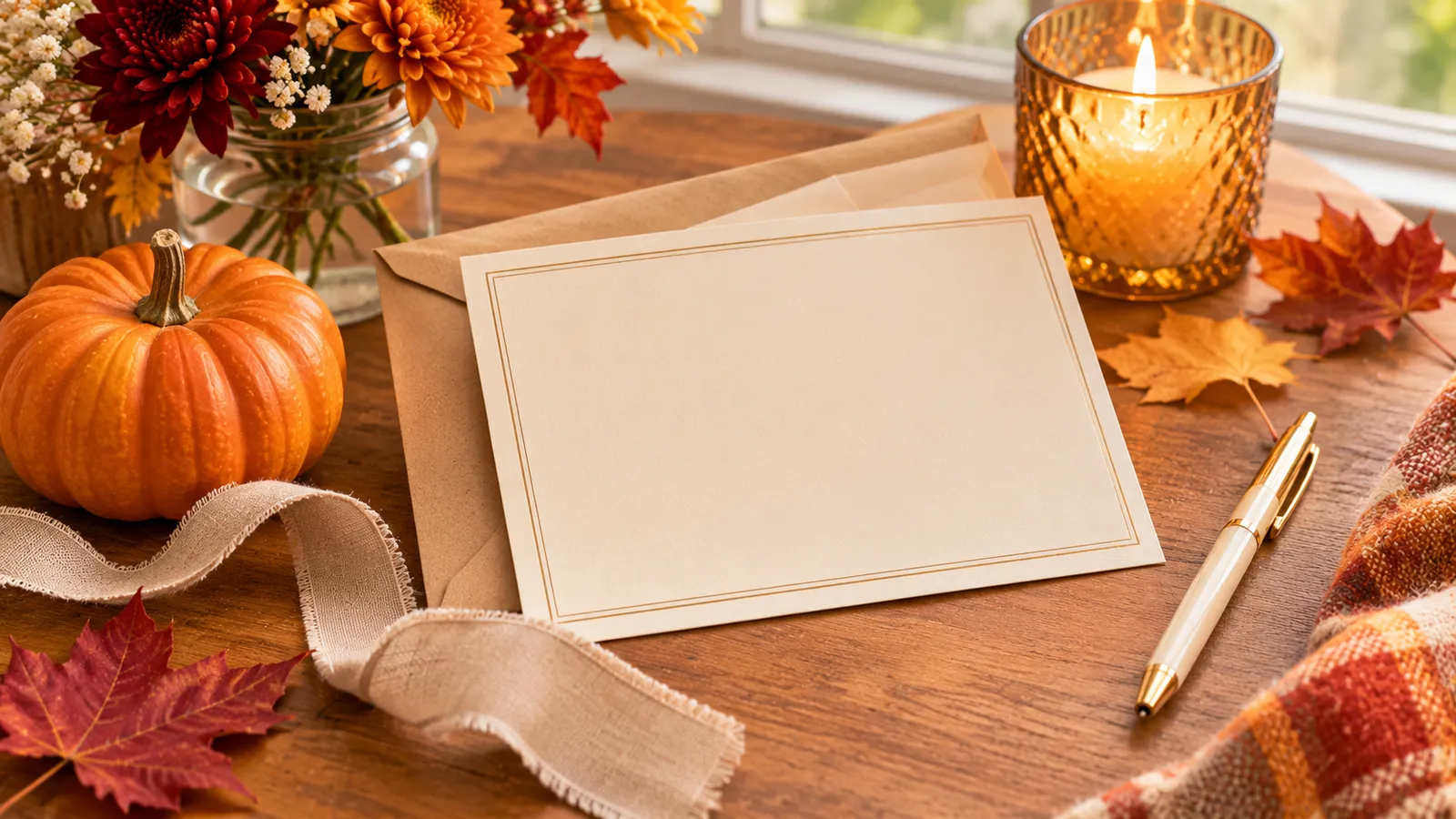
Give your friends enough notice to save the date, especially if you are planning the gathering around a busy holiday season. A simple digital invitation can include the date, start time, address, and whether the meal will be a potluck or hosted entirely by you. Add a short friendly message to let everyone know that the evening will be casual and welcoming.
It is also helpful to ask guests to RSVP by a certain date. This gives you a better idea of how much food, seating, and tableware you will need. If someone is bringing a dish, ask them to share what they plan to make so you can avoid too many duplicate sides. Keep communication easy and relaxed rather than turning the event into a long list of rules.
Decorate with Warm Autumn Colors
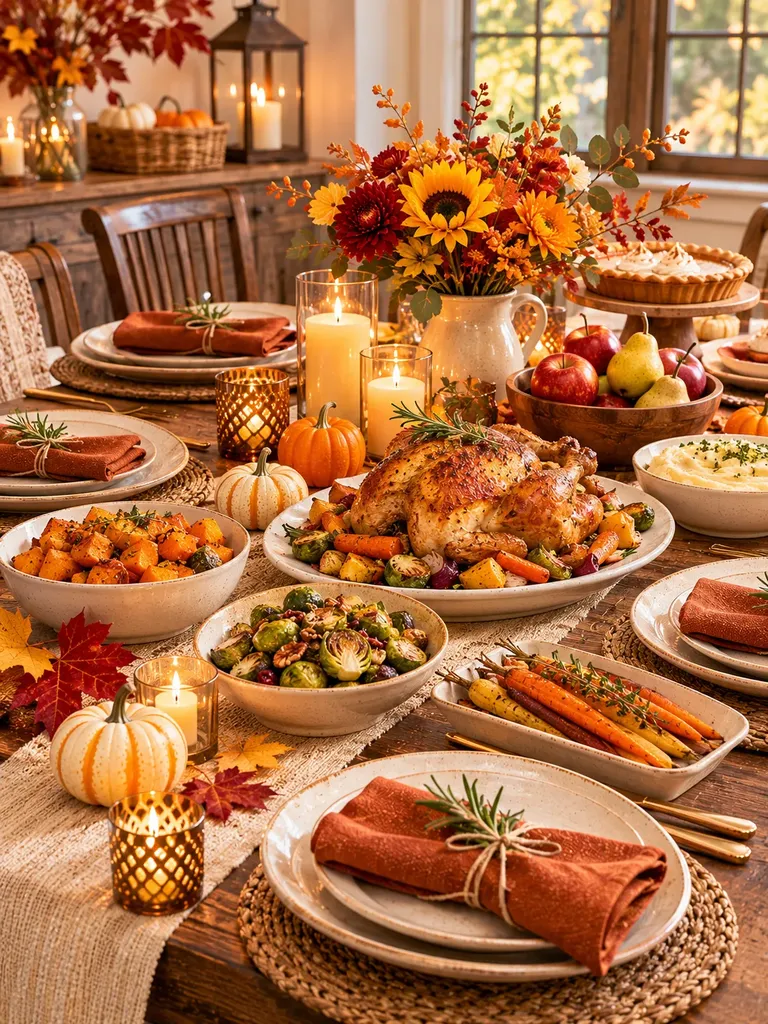
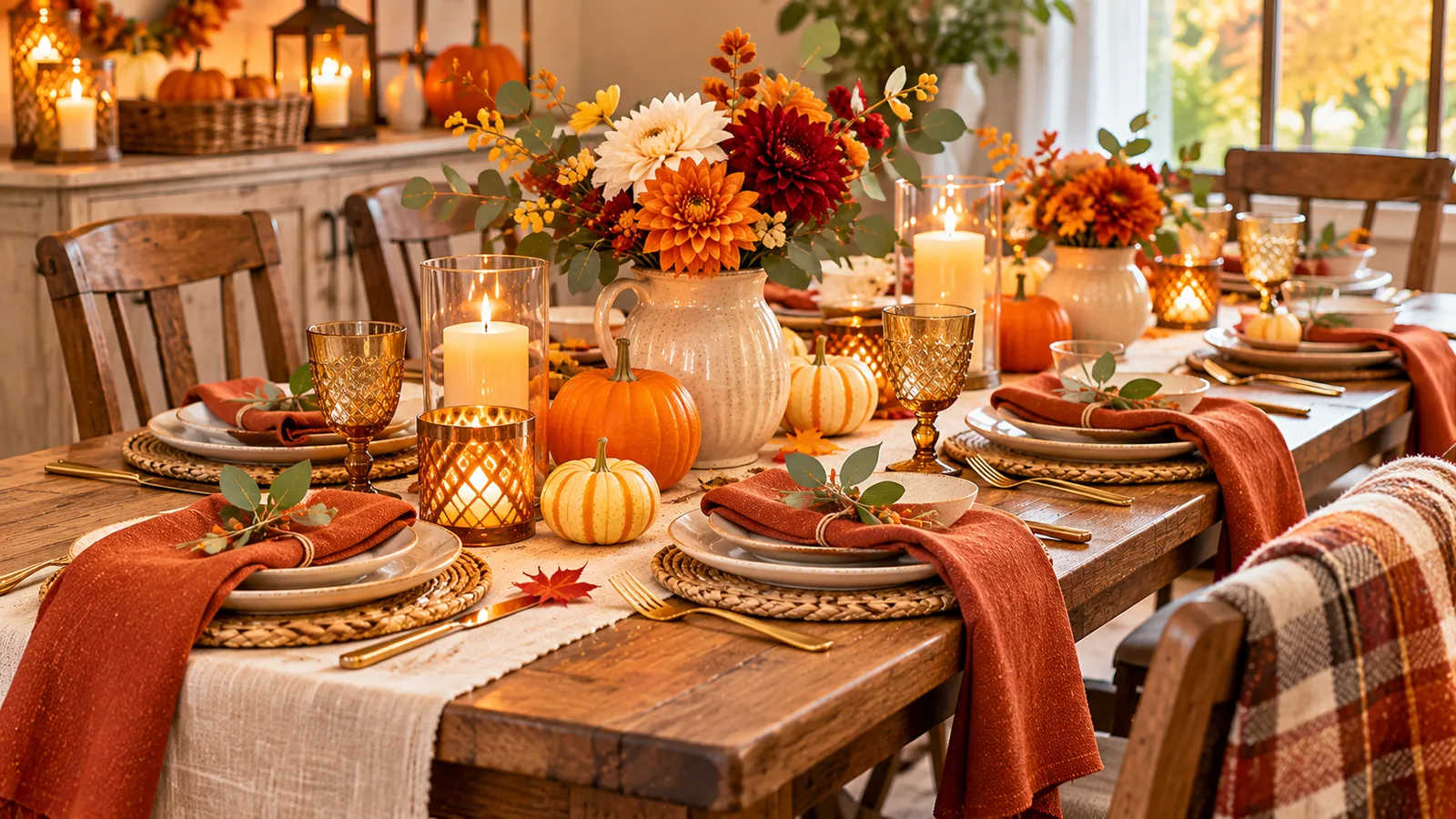
Autumn colors make a natural choice for Friendsgiving because they create a cozy atmosphere without much effort. Use rust, burnt orange, mustard yellow, deep red, warm brown, and cream in your table runner, napkins, flowers, and small decorative pieces. If you prefer a lighter look, add sage green, ivory, and natural wood for a softer seasonal style.
You can use decorations you already have at home and add a few fresh details from a local market. A bowl of apples, small pumpkins, or a vase of autumn branches can make a simple side table look festive. Try not to decorate every surface. Leaving some open space helps the room feel comfortable and gives guests room to place their drinks and belongings.
Create a Welcoming Friendsgiving Table
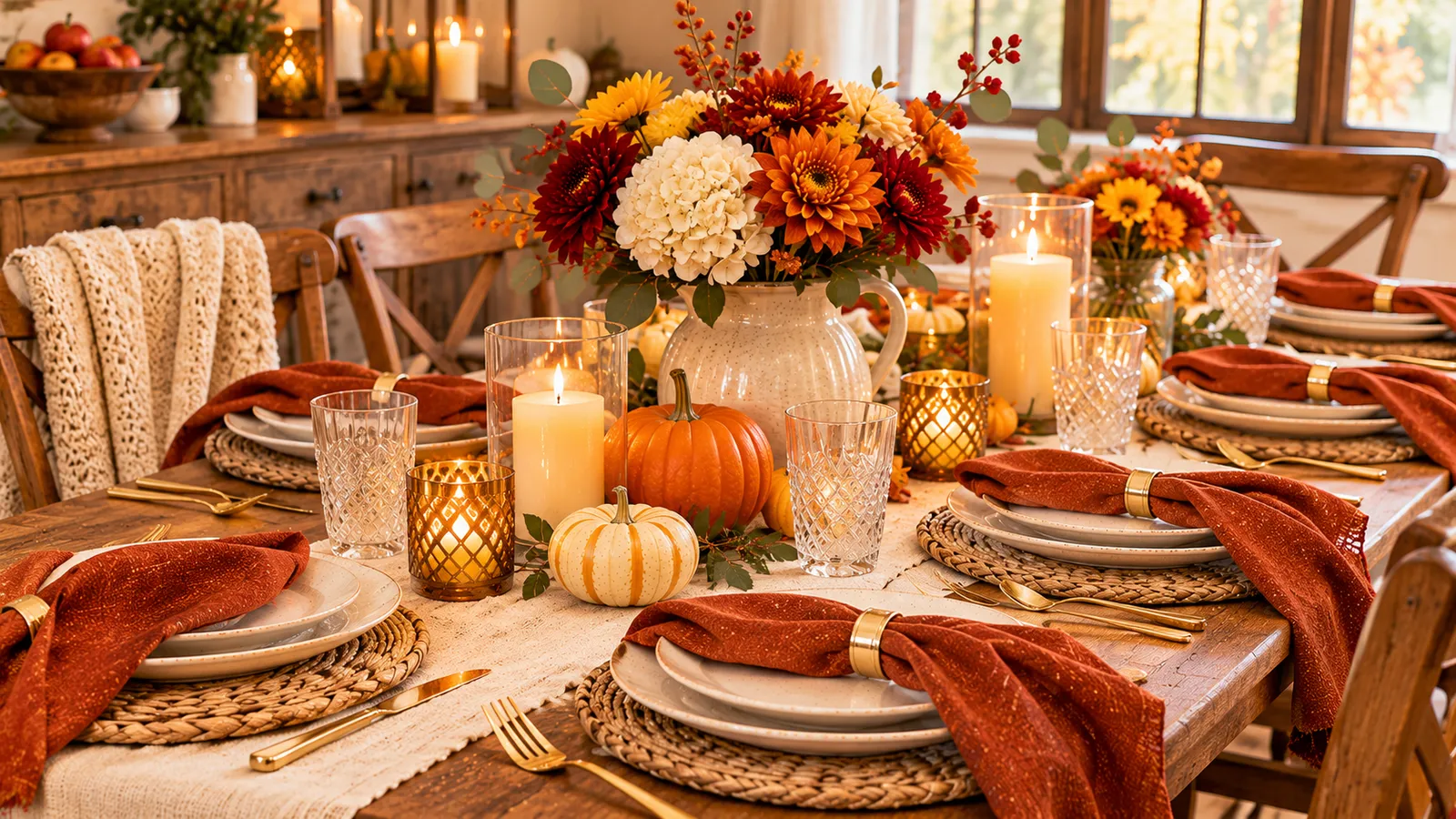
The dining table is often the main gathering spot, so make it inviting and practical. Start with a tablecloth or runner, then add plates, drinking glasses, and cloth or paper napkins. Woven placemats and simple ceramic dishes add a relaxed look, while a few metallic details can make the setting feel a little more festive.
Make sure there is enough room for the food everyone will share. If the table is too small for all the serving dishes, set up a nearby buffet or kitchen counter. Keep the centerpiece low so guests can talk across the table without having to move decorations out of the way. A comfortable table is more useful than one that looks beautiful but feels crowded.
Make a Seasonal Friendsgiving Centerpiece
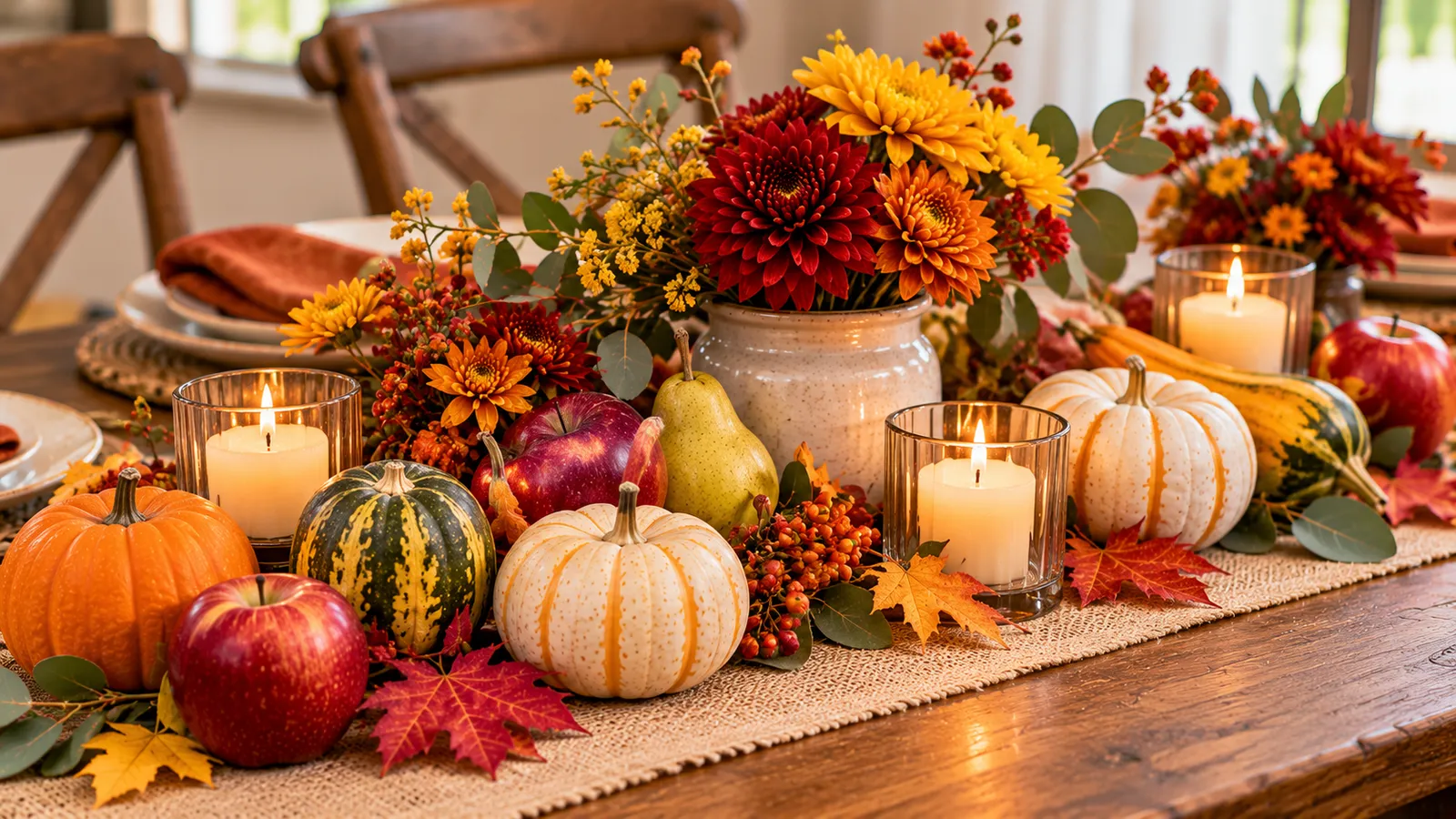
A seasonal centerpiece can bring the whole table together. Arrange mini pumpkins, gourds, apples, pears, and autumn leaves along the center of the table. You can also use a shallow wooden bowl, a woven tray, or a ceramic dish to hold the decorations. Add a few flowers or leafy branches for color and texture.
For a simple arrangement, combine natural items with candles in sturdy holders. Keep the decorations low and leave enough space between candles and anything flammable. If your table will be filled with shared dishes, use a narrow centerpiece that can be moved easily. You can also place the main decoration on a sideboard and keep the dining table mostly clear.
Plan a Friendsgiving Potluck
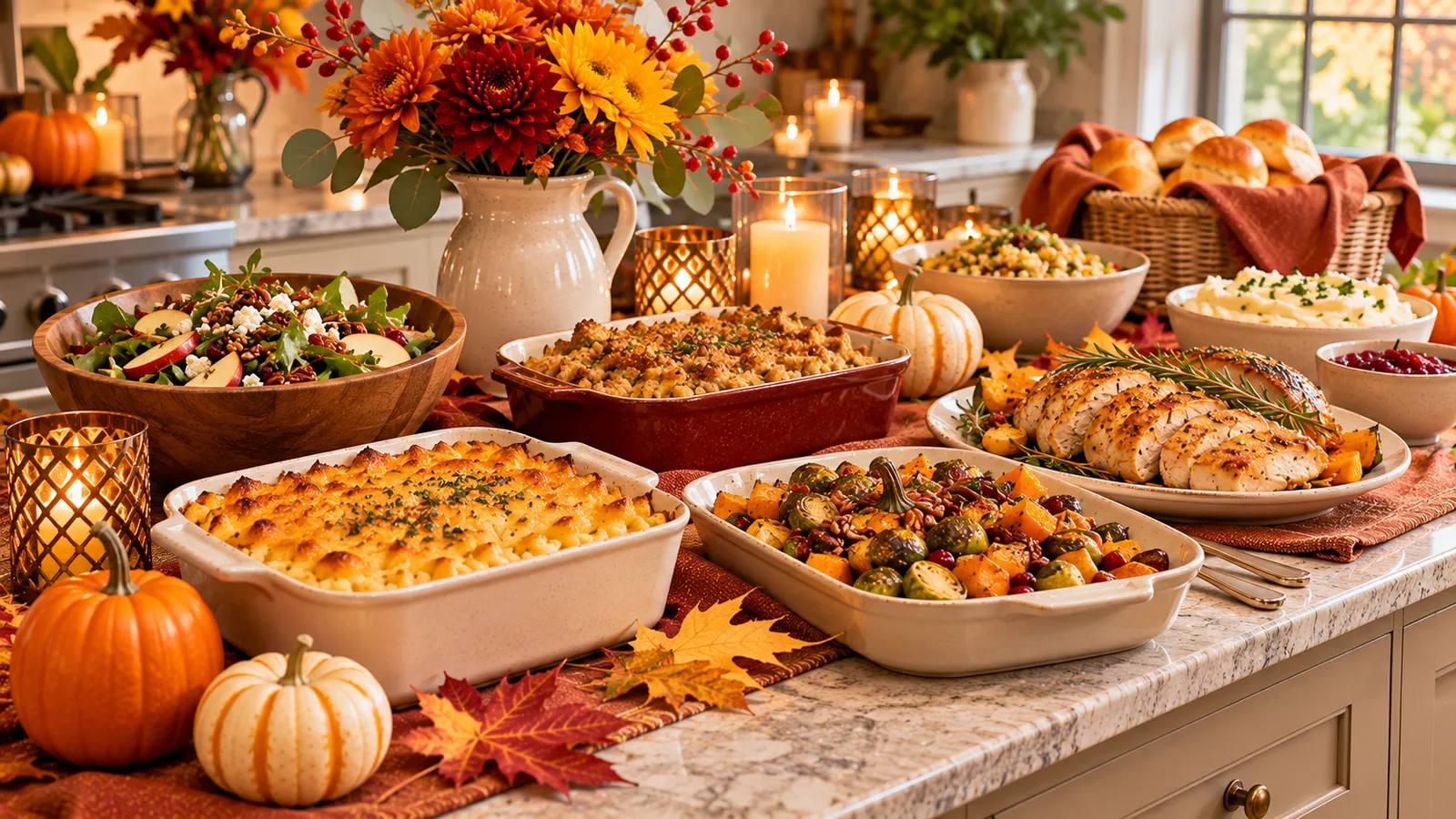
A potluck is a great way to make Friendsgiving easier for the host and more enjoyable for the group. Ask each guest to bring one dish, such as an appetizer, side, dessert, or drink. You can organize the list so the meal includes a good mix of options instead of ending up with several versions of the same dish.
Give guests a chance to mention dietary needs and ingredients that may cause allergies. Ask them to bring serving utensils if possible, and have a few extra spoons and plates ready just in case. A potluck does not have to look perfectly coordinated. The variety of homemade dishes is part of what makes the meal feel personal and fun.
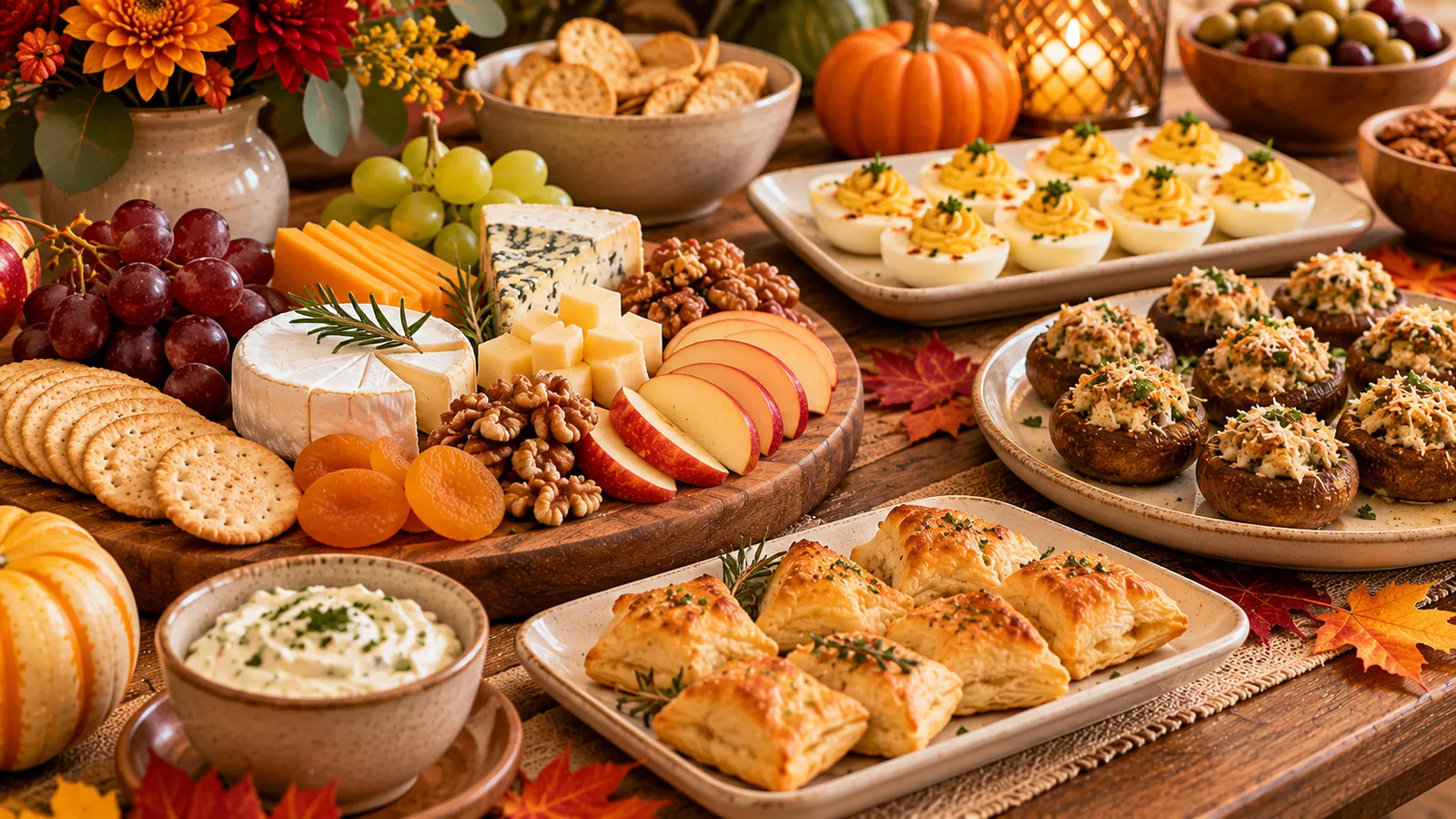
Serve Easy and Delicious Appetizers
Appetizers give guests something to enjoy while everyone arrives and the main meal is being prepared. A cheese and fruit board, deviled eggs, roasted vegetables, stuffed mushrooms, crackers with dips, or small savory pastries are all good choices. Pick a few options that can be prepared ahead so you are not cooking everything at the last minute.
Arrange appetizers on wooden boards, ceramic platters, or small bowls and place them somewhere guests can reach easily. Include a mix of crunchy, fresh, and savory bites. If you have guests arriving at different times, choose foods that can sit out safely for a short period or replenish them in smaller batches. Keep perishable items chilled until serving.
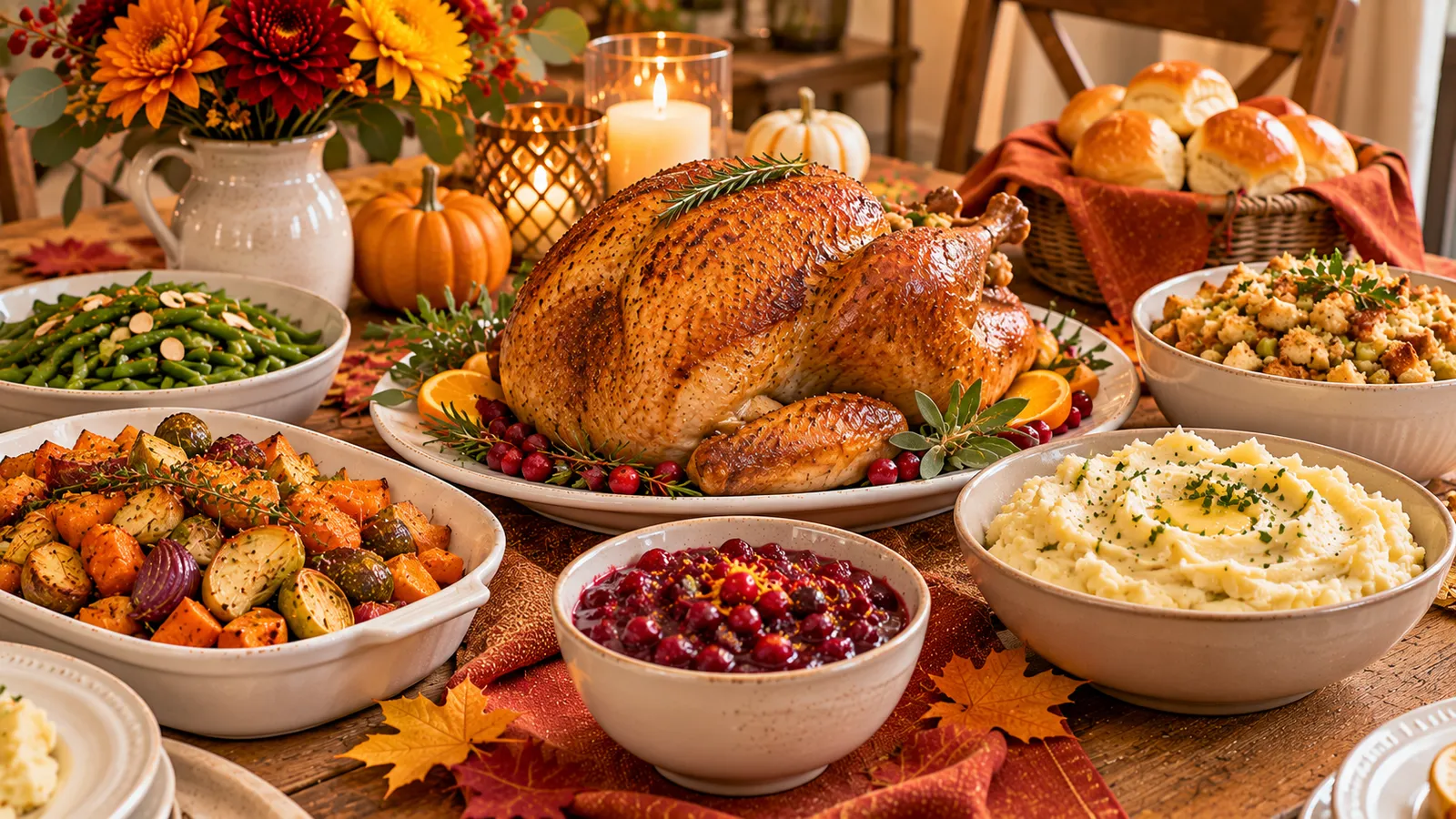
Put Together a Comforting Main Meal
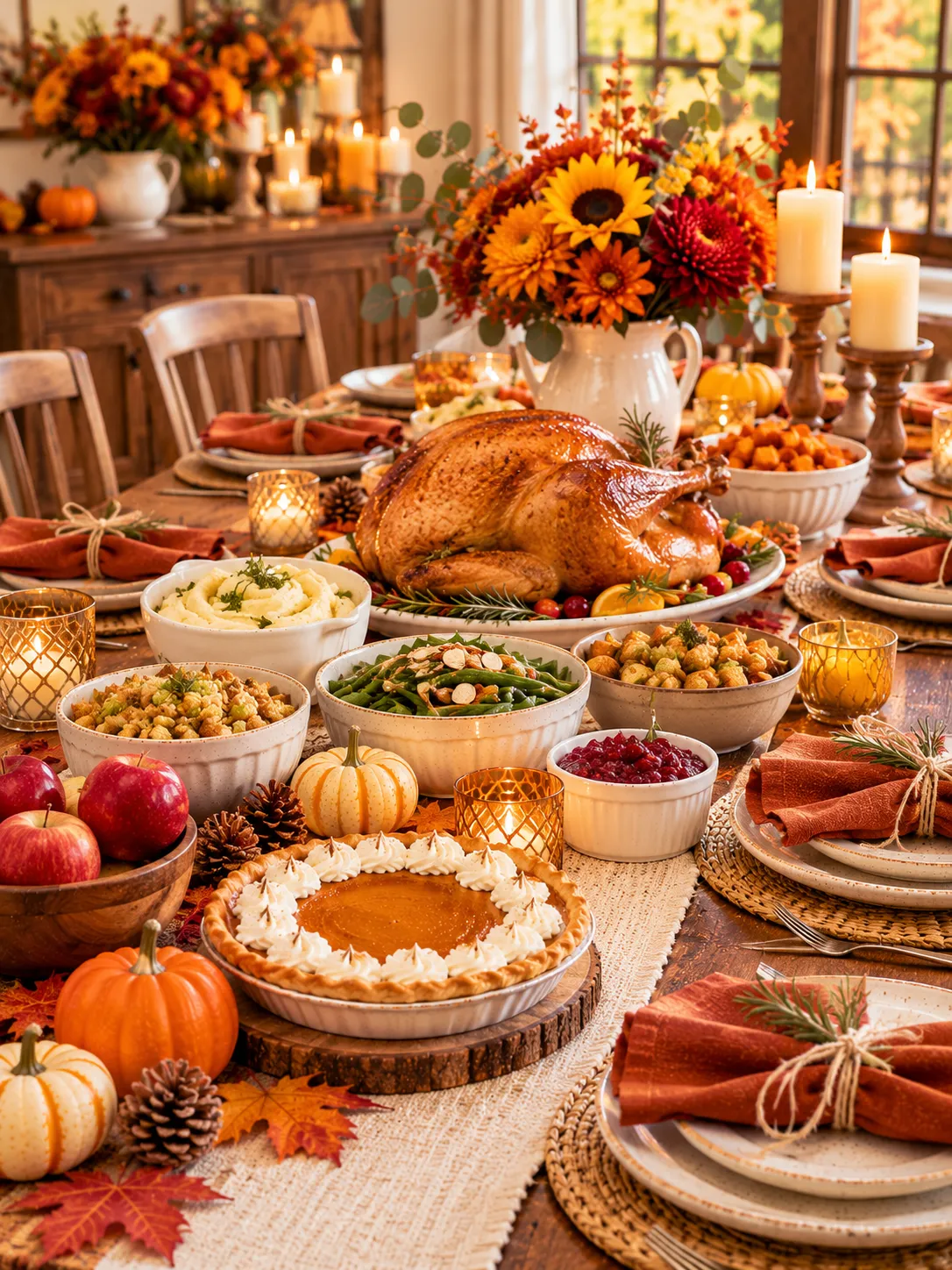
Friendsgiving food can be traditional, modern, or a mix of both. You might serve roast turkey, baked chicken, glazed ham, stuffed squash, or a hearty vegetarian casserole. Add familiar sides such as mashed potatoes, roasted vegetables, stuffing, cranberry sauce, and warm bread to create a meal that feels like a holiday without being overly formal.
You do not need to cook every dish yourself. Choose one or two main items to prepare and invite guests to contribute the rest. If your group has different food preferences, include at least one satisfying vegetarian main or side. Make a list of oven temperatures and cooking times ahead of time so you can plan which dishes need the oven and when.
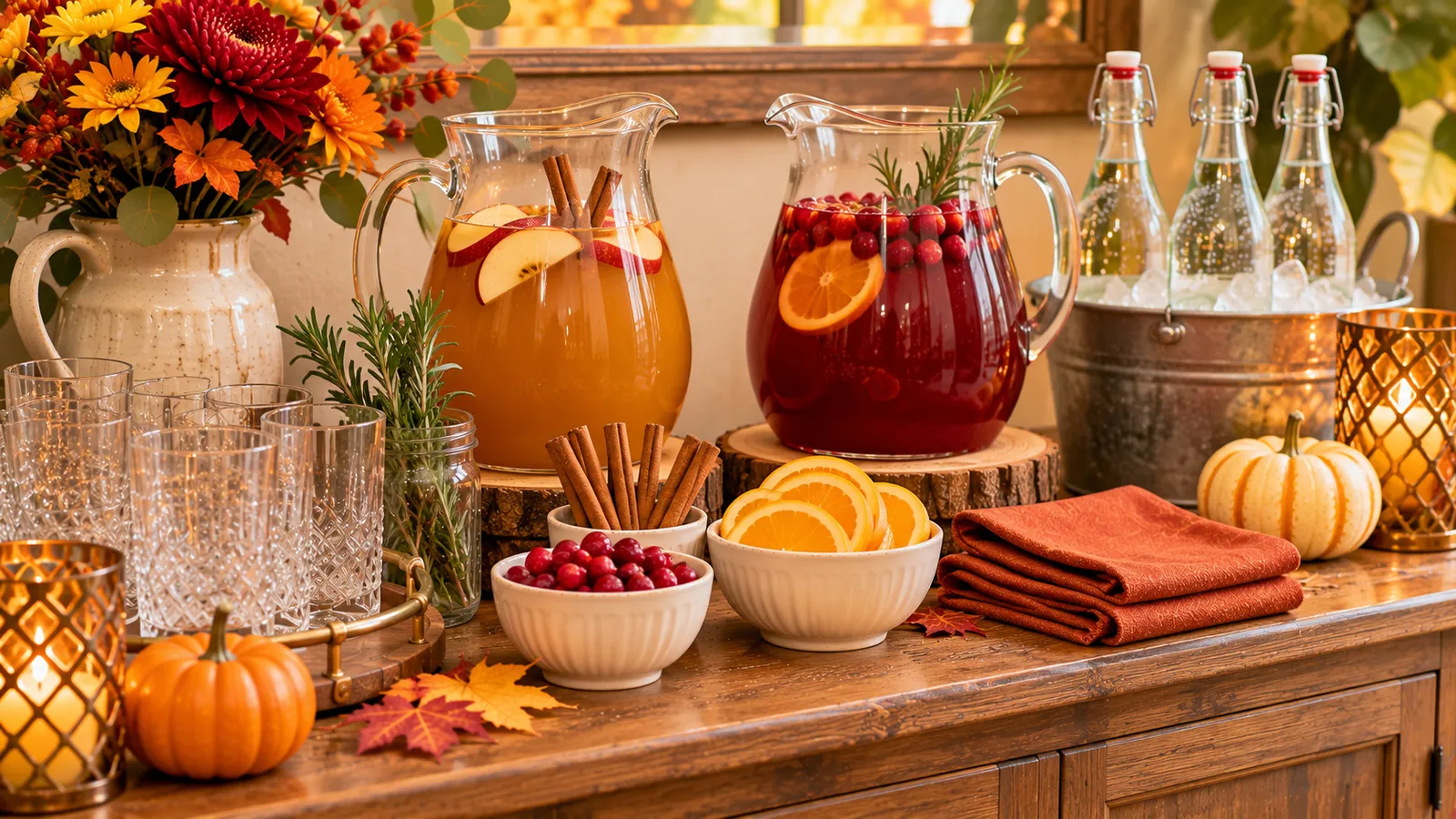
Set Up a Self-Serve Drink Station
A drink station helps guests serve themselves and keeps the dining table less crowded. Set out pitchers of water, sparkling water, apple cider, or a seasonal punch. Add sliced oranges, cranberries, cinnamon sticks, or fresh rosemary for a simple autumn touch. You can also offer coffee and tea for guests who prefer something warm after dinner.
Place glasses, napkins, and a small tray nearby to catch spills. If you are serving hot drinks, use a stable heat-safe surface and keep hot pots away from the edge of the counter. Labeling different drinks can help guests choose easily, especially if you have both sweetened and unsweetened options. Keep the station stocked throughout the evening.
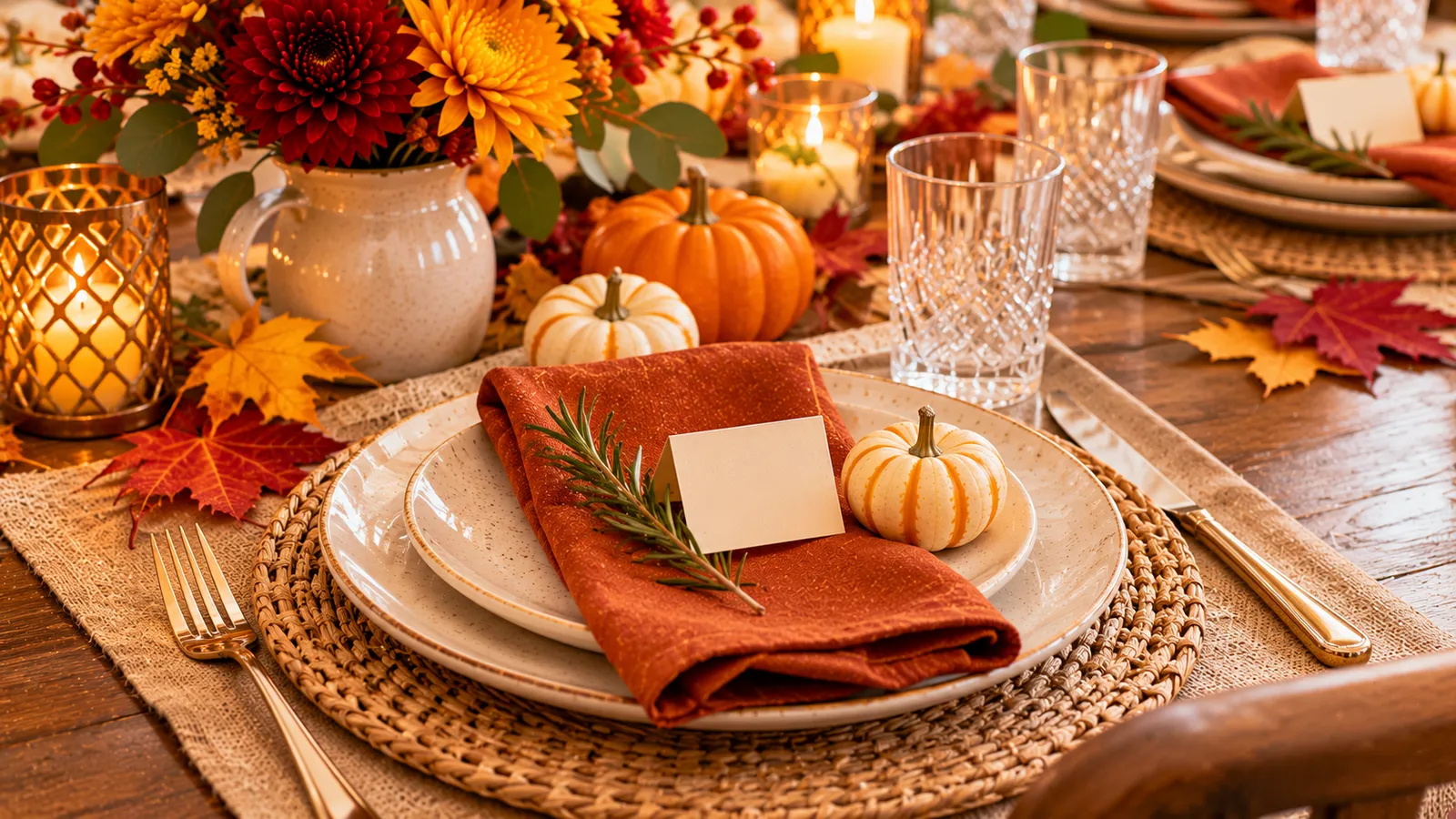
Add Personal Place Settings
Small personal details can make your Friendsgiving table feel thoughtful. Use simple place cards, a handwritten note, or a small seasonal item at each setting. A mini pumpkin, a sprig of rosemary, or a cinnamon stick tied with ribbon can add a festive touch without taking up much space.
If you are assigning seats, think about where guests may feel most comfortable. You could place friends who know each other together or mix the seating so people have a chance to meet someone new. For a casual gathering, you can skip assigned seats and let everyone choose. Either way, keep the table settings practical and easy to move when the food arrives.
Plan a Fun Friendsgiving Activity
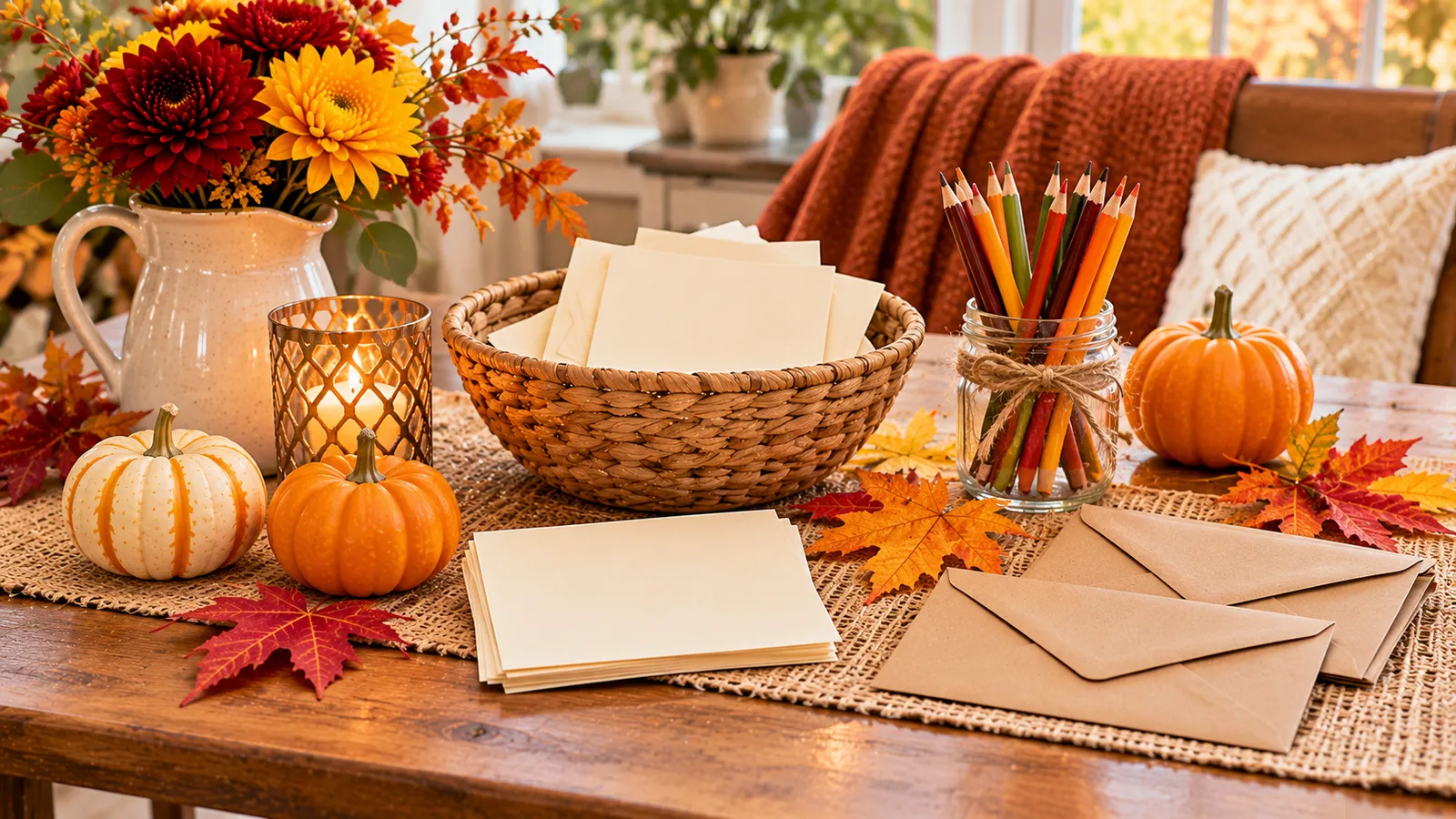
A few simple activities can make the evening more memorable, especially if not everyone in the group knows one another. Set out cards where guests can write something they are thankful for, create a small autumn photo corner, or prepare a bowl of conversation questions. These activities give people something to enjoy without making the gathering feel like a formal event.
You can also plan a lighthearted group game after dinner. Choose something easy to explain and suitable for the people attending. If your friends prefer relaxed conversation, do not force a schedule of activities. Let the evening develop naturally and keep the options available for anyone who wants to join in.
Create a Cozy Living Room Gathering Area
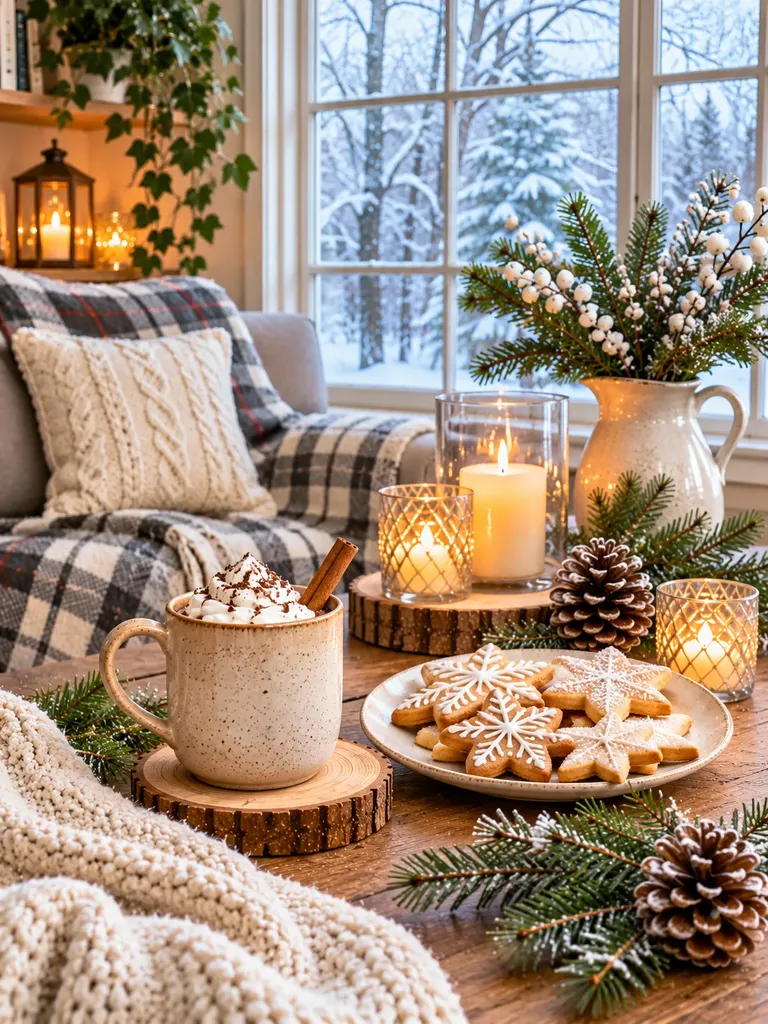
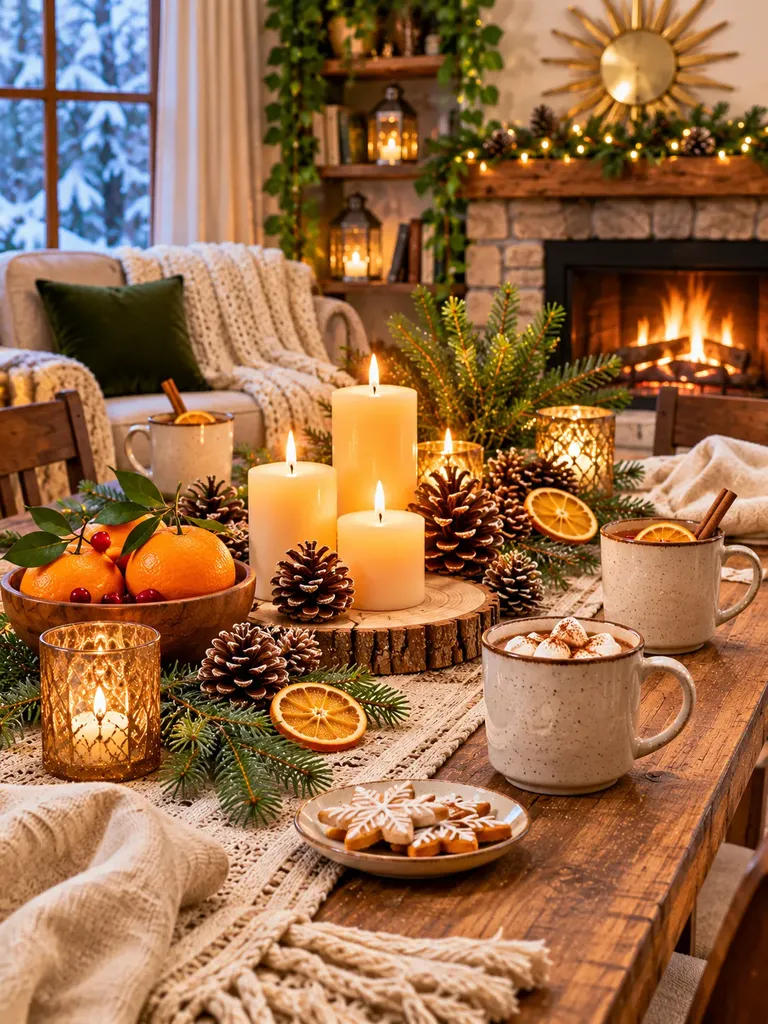
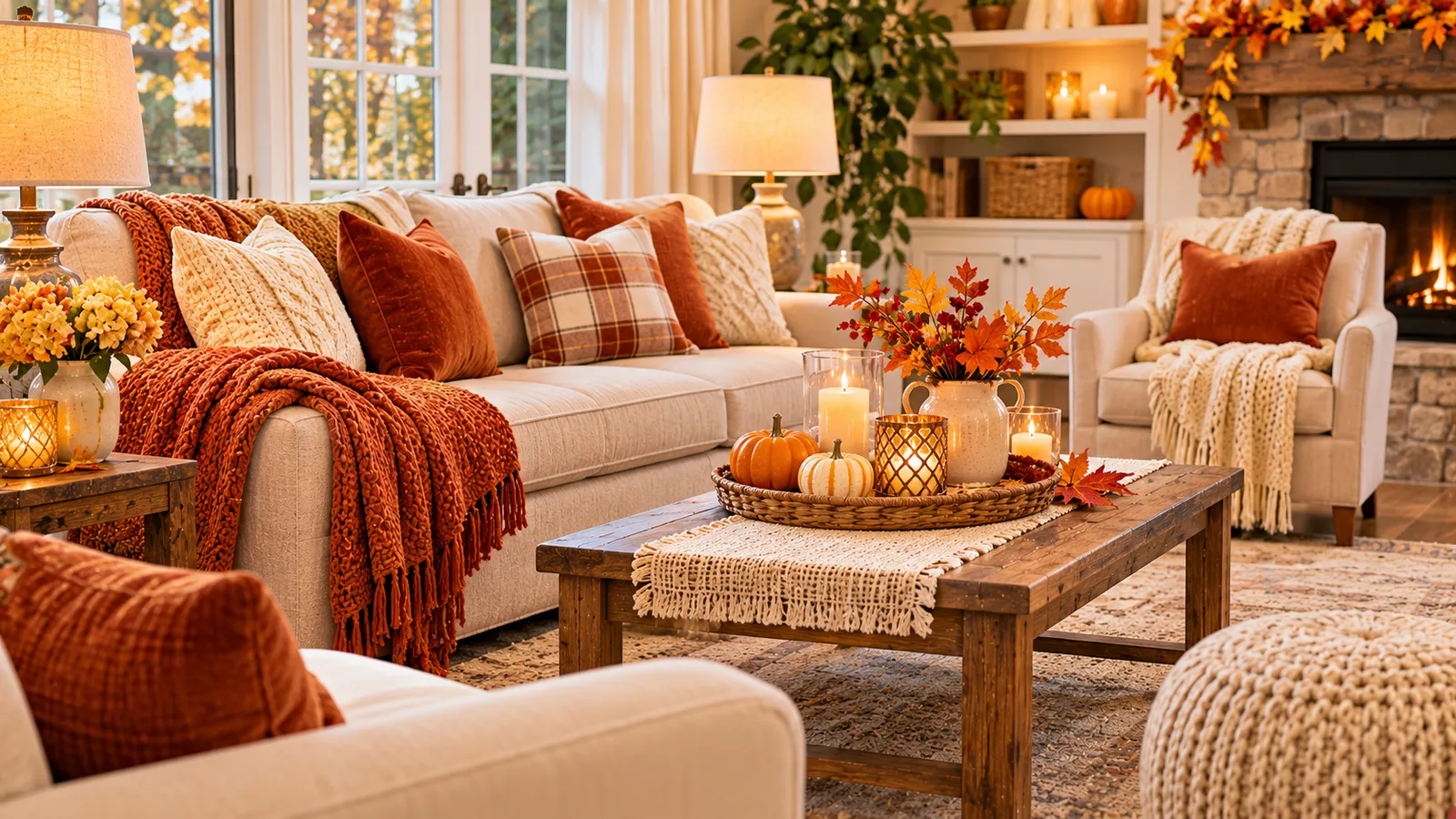
After dinner, guests may want to move away from the table and relax. Make your living room comfortable with extra cushions, soft throws, and warm lighting. Clear a little space for people to sit together, and keep a side table nearby for drinks and dessert plates. A few seasonal pillows or a simple autumn arrangement can carry the Friendsgiving look into the rest of your home.
Think about how guests will move between the dining area and living room. Leave walkways clear and make sure there are enough seats for everyone. If you do not have enough chairs, floor cushions or a comfortable bench can provide extra spots. A relaxed seating area encourages people to stay longer and enjoy the company.
Serve a Dessert Table with Fall Favorites
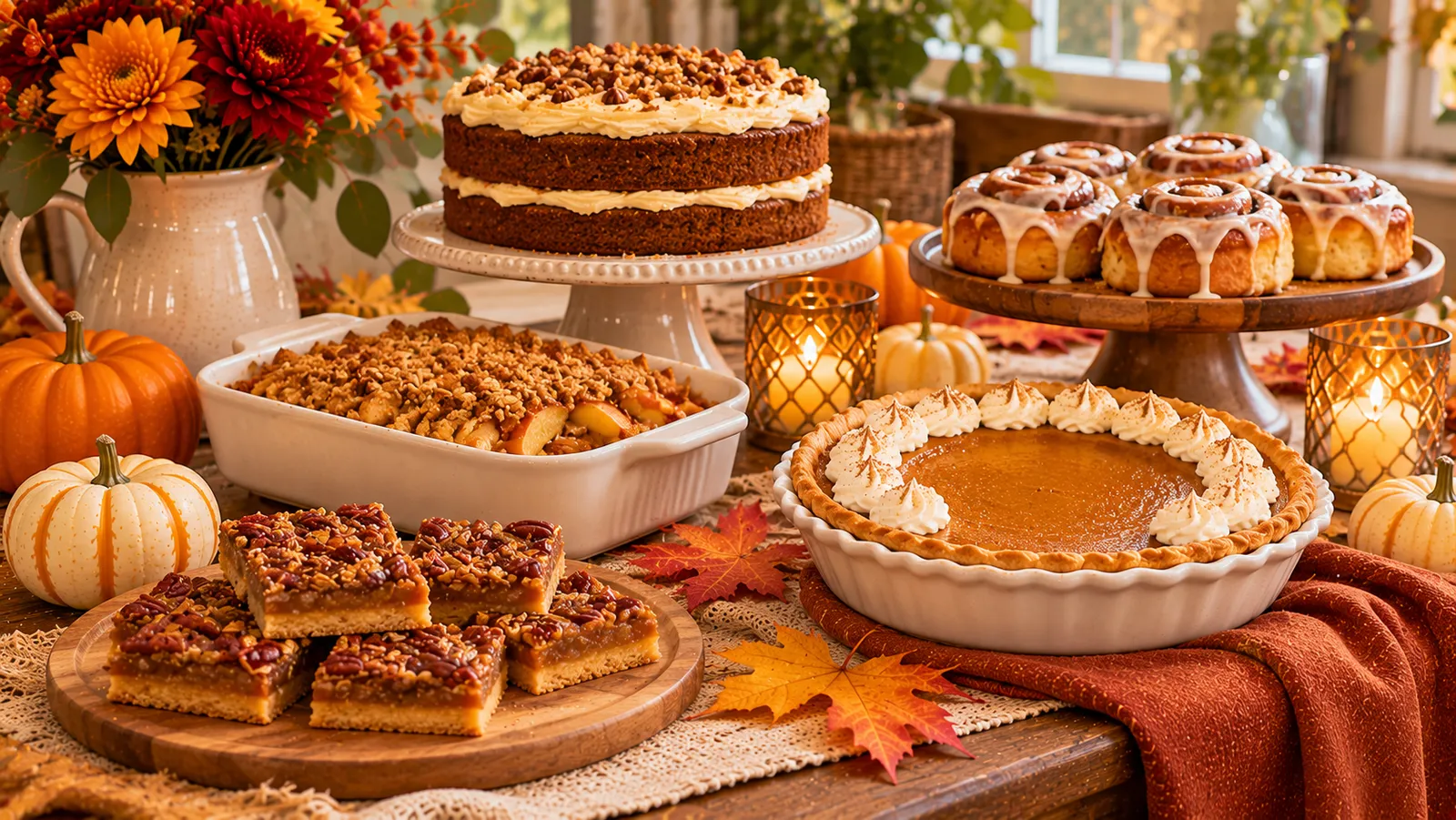
Dessert is a lovely way to finish a Friendsgiving meal. Offer a few autumn favorites such as pumpkin pie, apple crisp, pecan bars, cinnamon rolls, or spice cake. You can serve one large dessert or make a small dessert table with several choices so guests can sample different treats.
Use cake stands, wooden boards, and simple serving plates to create different heights on the display. Add a few mini pumpkins or autumn leaves around the edges, but keep the food easy to reach. If guests are bringing desserts, ask them what they plan to bring so you can prepare enough serving space. Keep chilled desserts refrigerated until it is time to serve them.
Prepare Small Take-Home Favors
A small favor is a thoughtful way to thank guests for coming. It could be a mini jar of homemade jam, a bag of spiced nuts, a wrapped cookie, a small candle, or a little bundle of cinnamon sticks. Choose something simple that fits your budget and does not take too much time to prepare.
Arrange the favors in a basket near the entrance or place one at each setting. You can add a small blank tag or a simple ribbon for a finished look. There is no need to make favors elaborate or expensive. A small gesture is enough to give guests something to remember the evening by.
Keep Hosting Simple and Enjoy the Evening
It is easy to spend so much time preparing for Friendsgiving that you forget to enjoy it. Make a short checklist for shopping, cooking, decorating, and setting the table. Prepare dishes that can be made ahead, set out serving pieces before guests arrive, and ask a friend to help with small tasks if you need an extra hand.
Remember that Friendsgiving is about spending time together, not creating a perfect event. If the table is not perfectly styled or a dish turns out differently than expected, let it go. Welcome everyone, share the food, and make room for conversation. A relaxed host often makes the whole gathering feel more comfortable.
Frequently Asked Questions
1. What should I serve at a Friendsgiving party?
Serve a mix of familiar holiday dishes and easy favorites. Roast turkey or chicken, mashed potatoes, roasted vegetables, stuffing, cranberry sauce, appetizers, and a fall dessert all work well. Include vegetarian choices and check for food allergies before planning the menu.
2. How do I decorate for Friendsgiving on a budget?
Use items you already own, such as neutral plates, glass jars, candles, and table linens. Add affordable seasonal touches like mini pumpkins, apples, autumn leaves, and grocery-store flowers. A simple color palette can make inexpensive decorations look coordinated.
3. Should Friendsgiving be a potluck?
It can be, but it does not have to be. A potluck lets guests contribute food and takes some pressure off the host. If you prefer to prepare the meal yourself, you can ask guests to bring drinks or dessert instead.
4. When should I host a Friendsgiving celebration?
Many people host Friendsgiving during the weeks before Thanksgiving, but you can choose any date that works for your group. Check everyone's availability early and choose a day that gives you enough time to prepare without feeling rushed.
Related Ideas
15 Fun Ways to Celebrate the First Day of Spring
15 Fun Spring Equinox Celebration Ideas
15 Spring Garden Party Ideas for a Beautiful Celebration
15 Spring Picnic Ideas for a Lovely Outdoor Day
15 Cherry Blossom Festival Ideas for a Beautiful Spring
15 Flower Festival Ideas for a Beautiful Celebration
15 Tulip Festival Ideas for a Beautiful Spring Day
15 Mother's Day Garden Brunch Ideas for a Lovely Day
15 Fun Ways to Celebrate the First Day of Summer
15 Summer Solstice Party Ideas for a Memorable Celebration
15 Summer Pool Party Ideas for a Fun Day by the Water
15 Fun Beach Party Ideas for a Perfect Summer Day
15 Tropical Party Ideas for a Bright, Fun Celebration
15 Outdoor Barbecue Ideas for a Fun Backyard Party
15 Backyard Cookout Ideas for a Relaxed Summer Party
15 Camping-Themed Party Ideas for a Fun Outdoor Get-Together
15 Fourth of July Summer Picnic Ideas for a Festive Day
15 First Day of Fall Ideas to Welcome the Season
15 Autumn Equinox Celebration Ideas to Welcome Fall
15 Fall Harvest Festival Ideas for a Fun Autumn Gathering
15 Pumpkin Patch Party Ideas for a Fun Fall Celebration
15 Apple-Picking Party Ideas for a Lovely Fall Day
15 Oktoberfest Party Ideas for a Fun German-Inspired Celebration
15 Bonfire Party Ideas for a Cozy Outdoor Celebration
15 Harvest Dinner Ideas for a Warm Fall Gathering